
Met Opera 2025-26 Review: Madama Butterfly
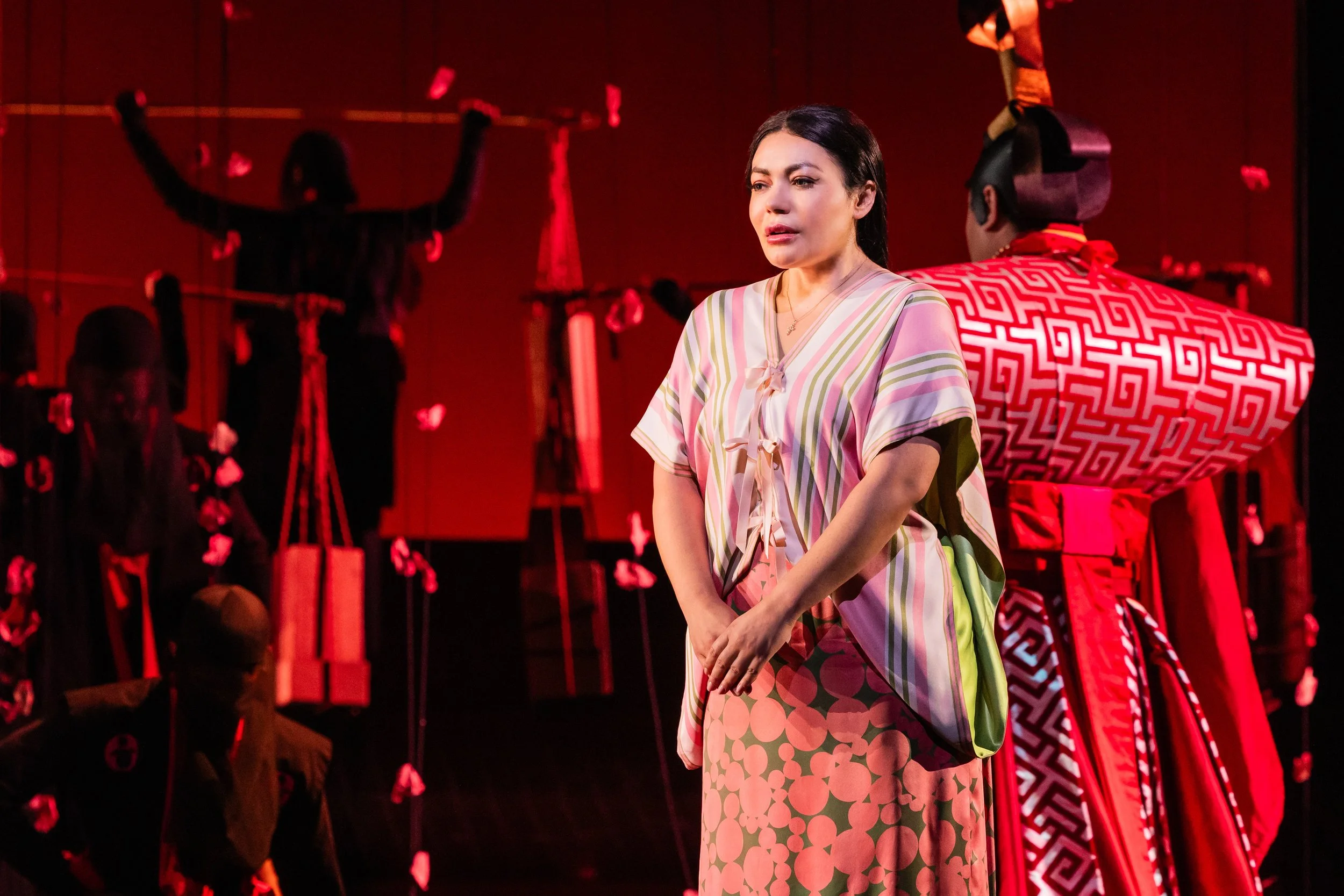
Ailyn Pérez and Jeongcheol Cha (in red, back turned) in Madama Butterfly (Evan Zimmerman/Met Opera)
If there exist people who don’t cry at Puccini’s Madama Butterfly, I don’t wish to know them. Fortunately, much has changed since Butterfly’s world premiere, 122 years ago today, which was an unqualified disaster. Nowadays, it is considered one of the brightest gems of the Italian tragic repertoire, blending exquisite musical lyricism with heartrending tragedy and a critique of American imperialism. This Met Opera season saw me attend my first performance of Butterfly, which I had hitherto avoided out of concern that my overeager tear ducts would leave me looking like Medea. I skipped the mascara, but the opera made a pincushion out of my little heart nonetheless.
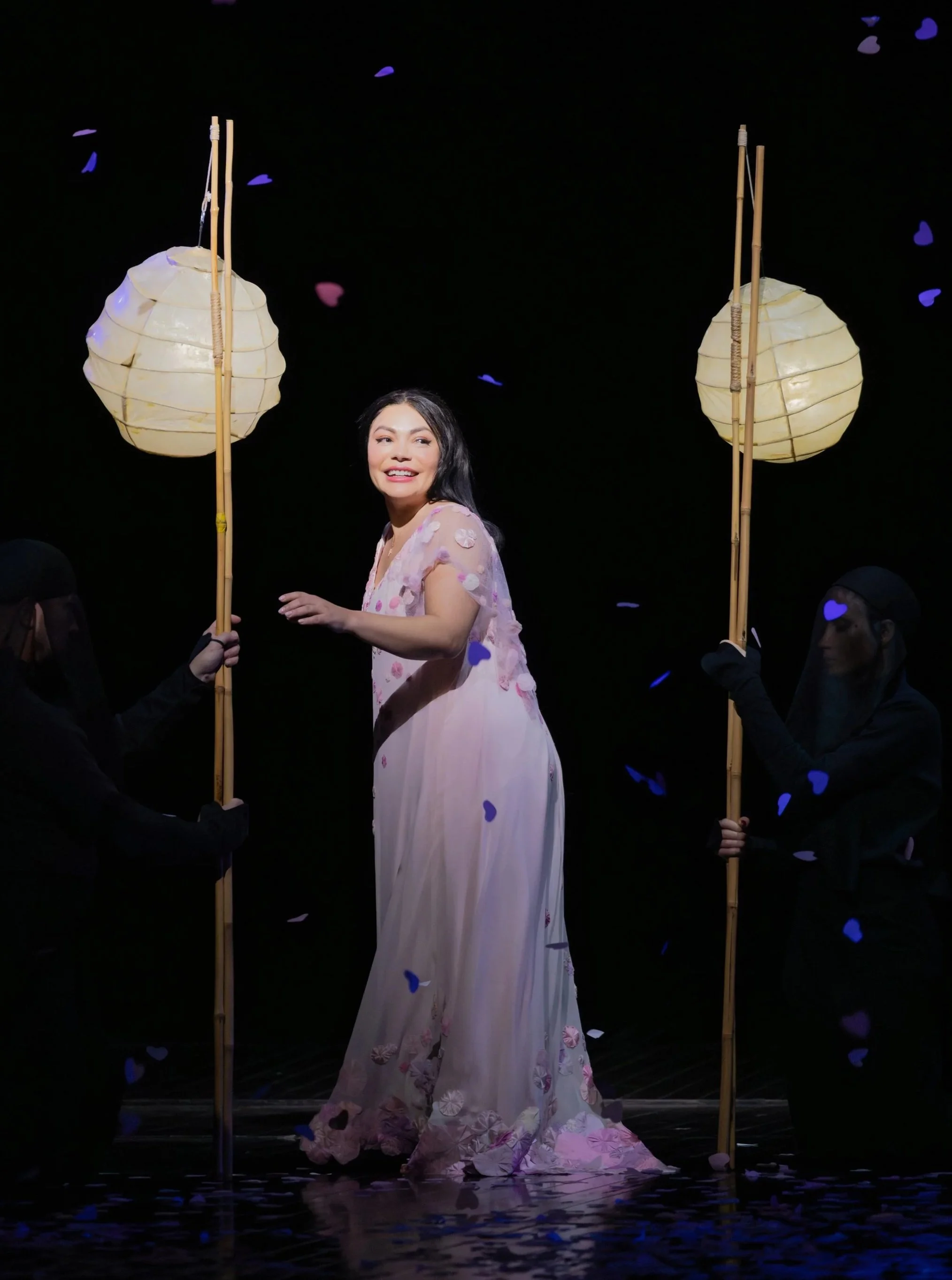
Ailyn Pérez in Madama Butterfly (Evan Zimmerman/Met Opera)
The luminous Ailyn Pérez’s performance in the title role confirmed her status as the Queen of the Butterflies, shining like the harbor beacon that Cio-Cio-San hoped would bring Pinkerton back to her. Throughout Act 1, she embodied childlike bliss and innocent love. When she made her entrance, glowing with a beatific smile and her voice bright as a moon lantern, there could be no doubt that she was indeed “the happiest woman in Japan.” In Act 2, she metamorphosed into a pillar of strength, but only in “Un bel dì” did the toll of the three years become apparent for a moment, and only for one moment. When she cried out that she might die of joy when Pinkerton returns, Ailyn’s voice of salted caramel fluttered with emotion, soaring to the B-flat rafters on an updraft of hope before gliding down in an expert diminuendo. During the Humming Chorus, which the Met Opera Chorus performed with heavenly creaminess, Ailyn seemed to be not only waiting but praying, the chorus an externalization of her meditative state.
Cio-Cio-San is often seen as a fragile character — she spends three years waiting for her man and then commits suicide when he abandons her —, but Ailyn’s interpretation emphasized her fortitude and resilience, the inner flame that she keeps blazing. Suzuki tells us that tears have been Cio-Cio-San’s frequent companions, yet Ailyn showed us that she is still a loving and attentive mother. Honorable to the end, she never lost her pride even in the throes of utter despair and devastation to which she descended in Act 3, Ailyn’s timbre taking on hues of dark garnet and plum. At curtain call, it was evident that she had poured everything she had, everything she is, and deep wells of love into her portrayal.
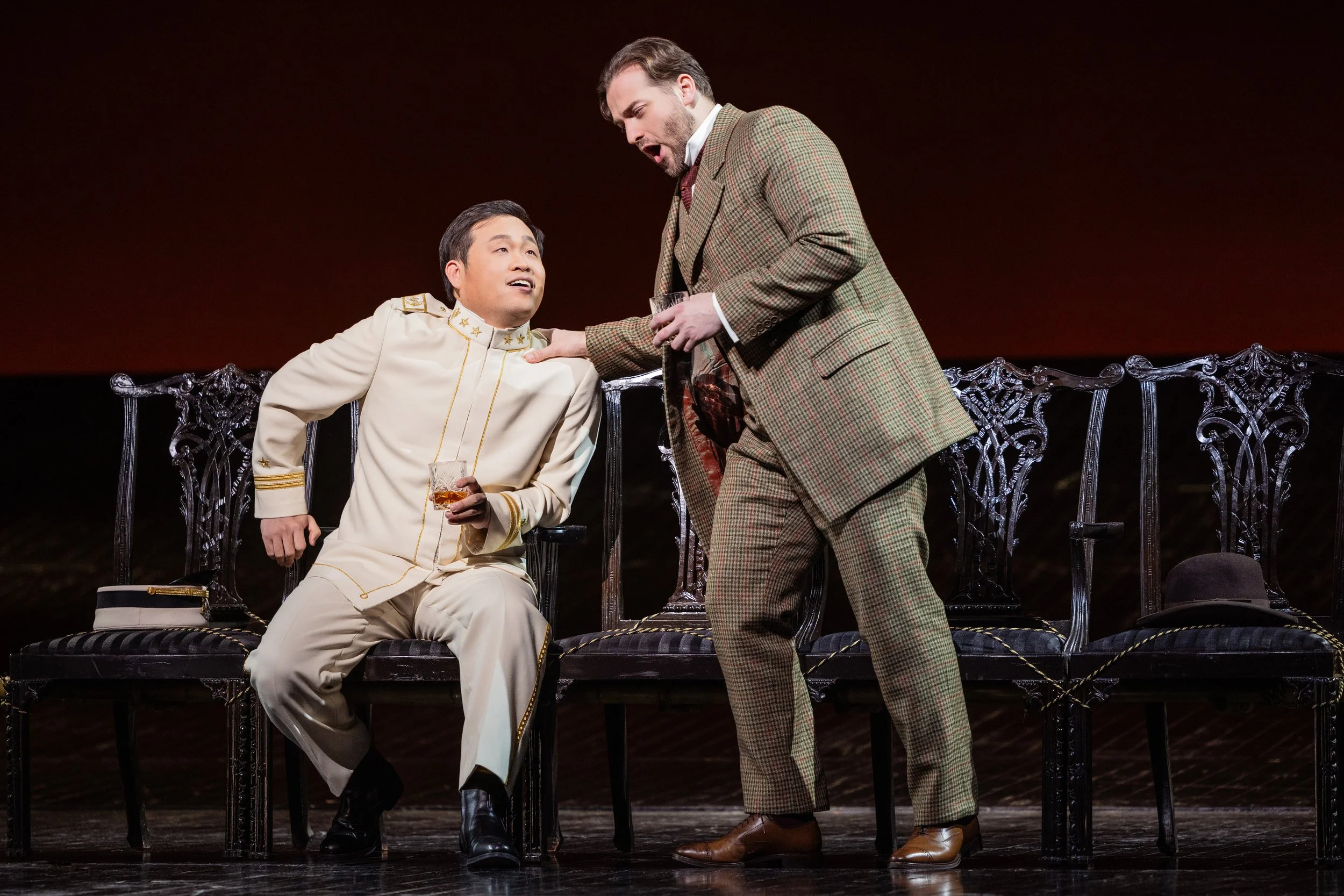
SeokJong Baek and Andrzej Filończyk in Madama Butterfly (Evan Zimmerman/Met Opera)
SeokJong Baek, the winner of the 2025 Girl of the Golden Met Award for Best Tenor, sang with a robust, full-bodied tone but seemed to view Ci0-Cio-San less as a lover than as a flower to pluck, to wilt out of sight and out of mind. Andrzej Filończyk displayed gentility as well as a sonorous and mellow baritone in the role of Sharpless, the American consul who tries and fails to keep Pinkerton from following his worst impulses and destroying Cio-Cio-San. Butterfly has faced its share of controversy for its depiction of Japan, but in an opera with only three American characters — one of whom is a piece of work and the other of whom has all of six lines —, it is Sharpless whose humanity shields Butterfly from accusations of anti-Americanism.
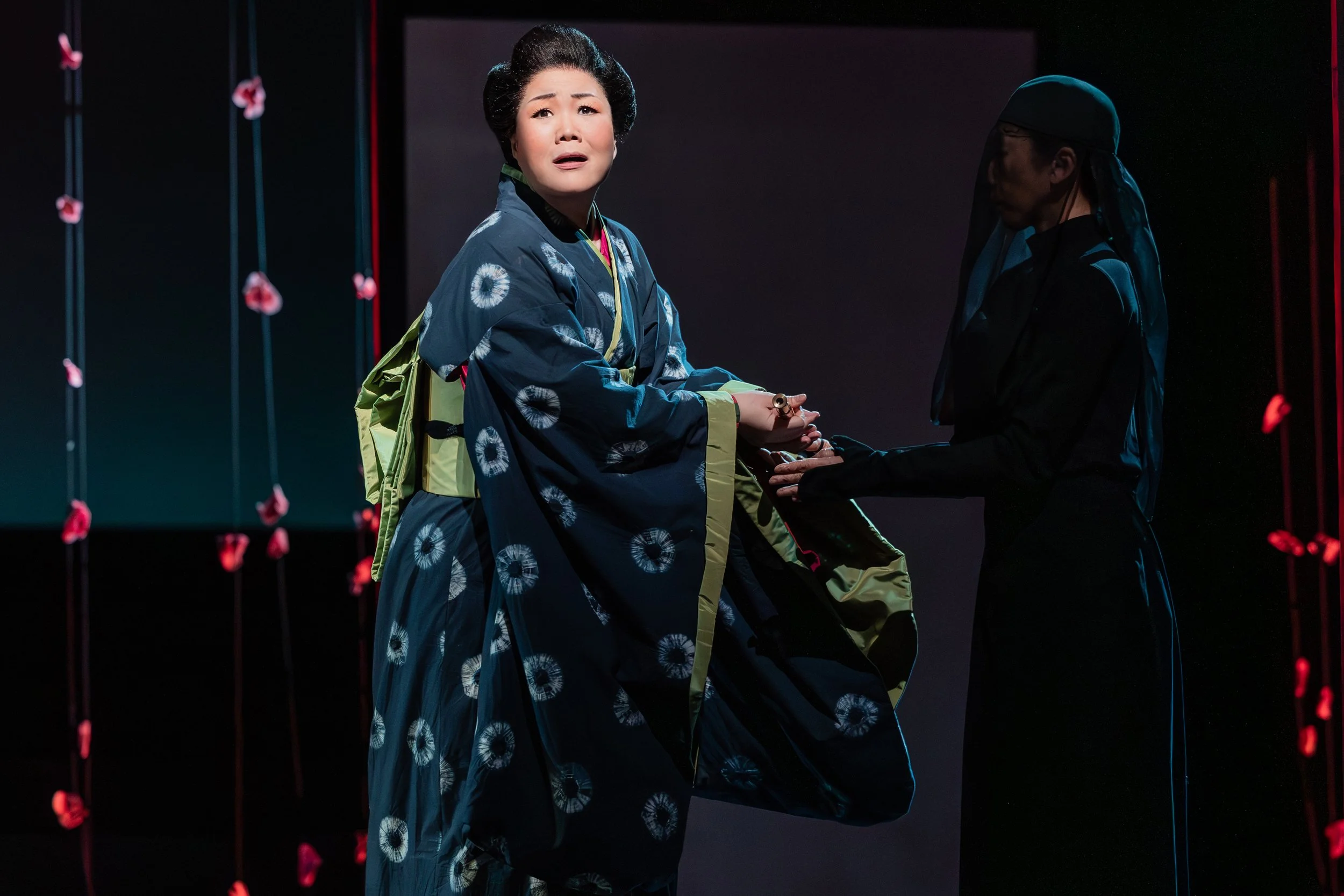
Hyona Kim in Madama Butterfly (Evan Zimmerman/Met Opera)
Hyona Kim was superb and immensely affecting as Suzuki in her Met debut, with strong singing and some of the most credible weeping I’ve seen onstage. She was both the voice of reason and of kindness for Cio-Cio-San, her steadfast support all the more valuable because she seemed to know deep down that Pinkerton had left for good. Jeongcheol Cha was a majestically intimidating Prince Yamadori, and mezzo-soprano Hannah Jones succeeded in conveying Kate Pinkerton’s guilt and conflicted feelings despite her limited stage time and even more limited music. Under the baton of Maestro Marco Armiliato, the Met Opera Orchestra brought warm depths of nuance and vibrant color rippling over us.
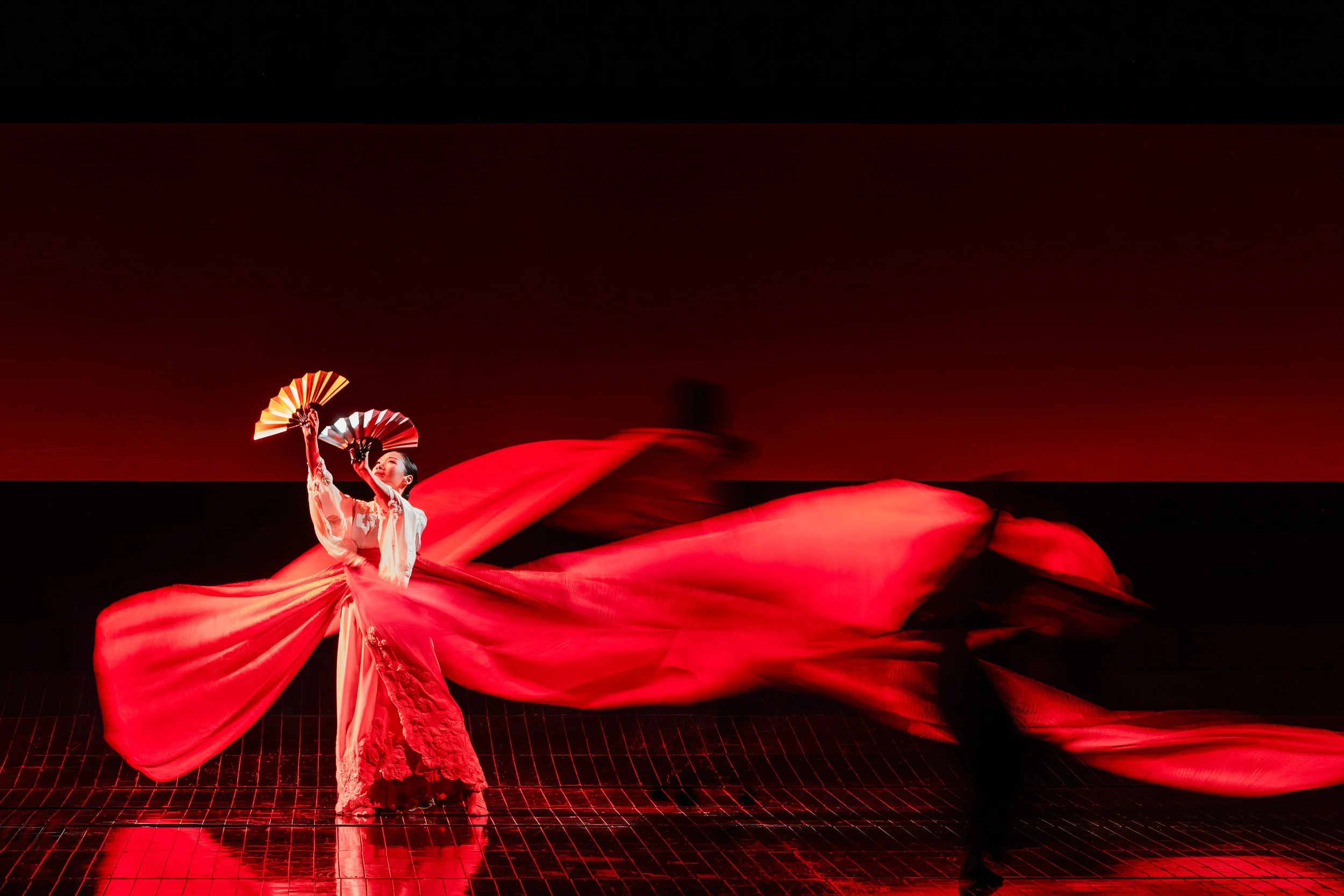
Hsin-Ping Chang in Madama Butterfly (Evan Zimmerman/Met Opera)

Ailyn Pérez, Hyona Kim (asleep), and two of the Dolore puppeteers in Madama Butterfly (Evan Zimmerman/Met Opera)
Anthony Minghella’s production is as breathtaking as it was when it premiered twenty years ago. The opening sequence, in which the dancer Hsin-Ping Chang performs a magnificent fan dance, mesmerized me before a single note of music had sounded. The sets are spare and minimalist, with sliding screens that act as walls and a solitary chair, but Han Feng’s costumes — a riot of vivid colors — and a profusion of flowers make Butterfly a feast for the eyes. The puppeteers (Kevin Augustine, Tom Lee, and Jonothon Lyons) managing the Bunraku puppet that represents Cio-Cio-San’s son overcame my initial skepticism of the concept with their sensitive and poignant touch. It helped that Ailyn’s interactions with it were tender and maternal, she breathing in tandem with the puppeteers until I almost believed Dolore was a real child. Augustine, Lee, and Lyons more than earned their bow at the end.
Ailyn and the rest of this cast save for Baek, who turns Pinkerton over to Matthew Polenzani, return in March for four more performances. This may have been my first time experiencing Butterfly, but I doubt very much whether I shall see a more wonderful Cio-Cio-San in the foreseeable future.



Congratulations to all the winners for triumphing in their highly competitive categories and to all the nominees for their extraordinary performances!