
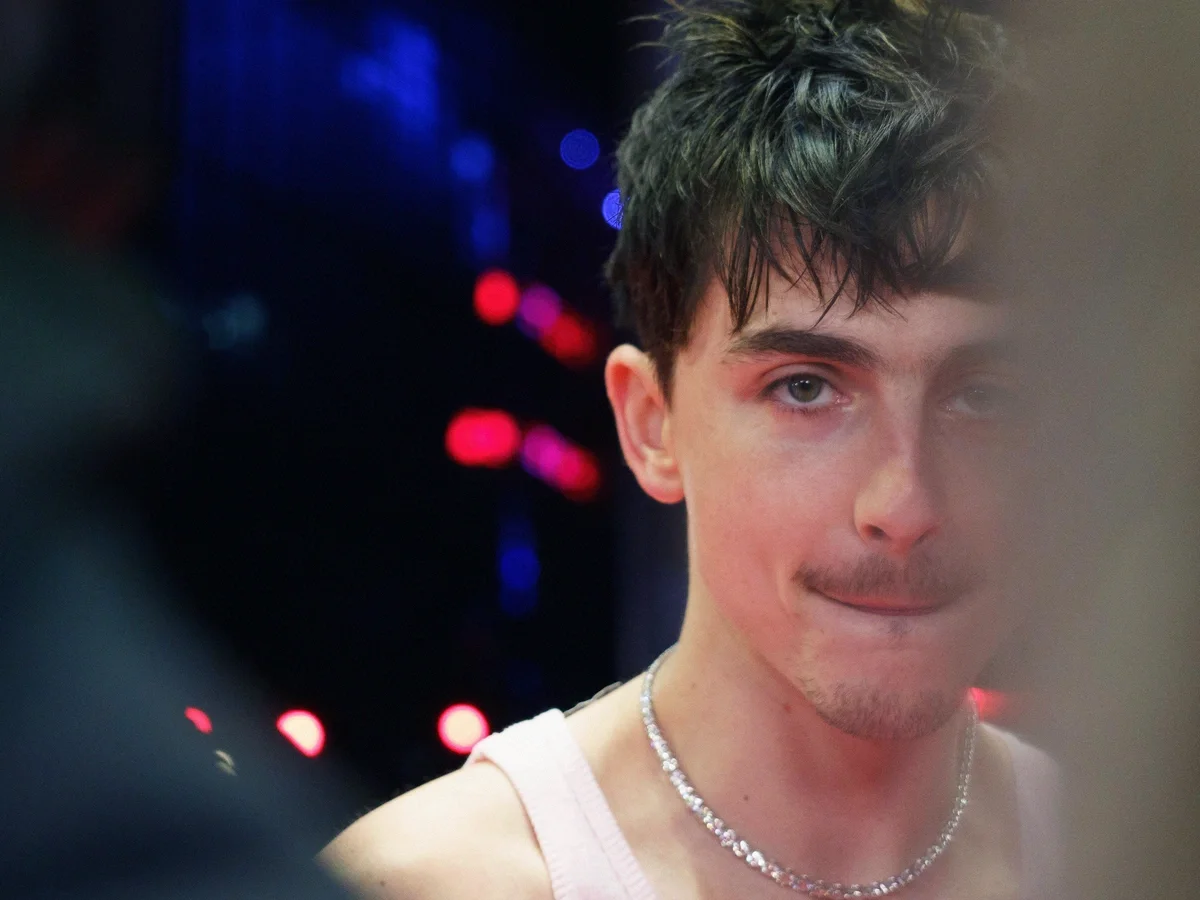
Timothée Chalamet at the Berlinale (Bety Photo/Alamy)
“I don't wanna be working in ballet and opera, or things where it's, like, ‘Hey, keep this thing alive,' even though it's, like, no one cares about this anymore.” —Timothée Chalamet at a Variety & CNN Town Hall, February 2026
Dear Timothée Chalamet,
Opera is more than 400 years old. One could use that fact to conclude that it is outdated and irrelevant. Or we could seize on the miracle of opera still being very much here, alive, and loved. We sing when we can’t speak anymore, something you ought to appreciate after doing a musical (Wonka (2023)). Opera is akin to physical, paper-paged books in an overwhelmingly digital world. Live theater, unlike film (a very fine art in its own right), permits no do-overs, insisting that we be fully present in the moment, and opera combines the best of so many artistic disciplines: singing, acting, dance, poetry. It enthralls the spirit; connects us to the past, present, and future all at once; and reaches into and opens up the depths of one’s soul. It can be cathartic for people needing help to process their lives, or provide a respite from reality. To deny opera’s relevance is to deny, by extension, the relevance of universal themes and emotions like love, loss, rage, joy, sorrow. Rashly pouring your heart out to your crush (Eugene Onegin). Not listening to Dad (Die Walküre). Fretting over your beauty as you age (Thaïs).
Opera may not now be the favorite entertainment of the masses, as it was for many centuries. And yet there are those who love it. According to your logic, why should we keep on pushing people to go see movies in theaters, if people are overwhelmingly more likely to watch on streaming? Film, a barely century-old medium, is in imminent danger of occupation by artificial intelligence (I take no joy in saying this), while opera is carrying strongly on. Financial profitability may be increasingly mixed — the Met recently had to tap into its endowment, but its upcoming run of Wagner’s Tristan und Isolde sold out before even opening — but that is not the measure of success. Neither artistic nor cultural value is s0lely determined by money, visibility, or popularity. You may not care about opera, but that does not negate the multitudes who do, just as you have millions of fans despite many others’ total indifference to you.
I won’t pretend that opera is not struggling. It is. But a part of the problem is people like you: people who use their platforms to spread misinformation and myths about opera. Your privileged position in the acting world should prompt you to speak up for other artists, not to denigrate them. Your addition of “all respect to the ballet and opera people out there” means nothing if you just derided the industries in which they work, the very art that they create. Most of the people working in opera (or film) aren’t considered megastars. Their names do not go on billboards. Nevertheless, no opera house would run without these stagehands, musicians, choristers, supernumeraries, dancers, makeup artists, tailors, revival directors, and so forth. All of them, including singers, are in this business because they care about opera enough to dedicate their lives to it, and you attack their livelihood. The tickets they help sell may be $35 to $350 dollars, but their craft is priceless.
Your comments also conveniently ignore the abundance of films that have lovingly incorporated opera into their stories and scores. In Little Women (1994, not yours), Bizet’s Les Pêcheurs de Perles sets the scene for Jo and Professor Bhaer’s first kiss — sorry, Laurie. Mission Impossible: Rogue Nation (2015) sees a thrilling action scene take place at the opera, during the climactic aria of Puccini’s Turandot. In The Shawshank Redemption (1994), the “Sull’aria” duettino from Mozart’s Le Nozze di Figaro gives the prison inmates a breath of life and hope. Your industry borrowed from ours long, long before The Hours (2002) ever became an opera, and the opera world was happy to enrich film. Now you say no one cares.
Get off your high horse. You may be an It Boy, but the art form that you practice is not superior to opera or ballet or any other. You received an Oscar nomination for your portrayal of a ping-pong player fighting for recognition of his unfashionable and very niche passion. What entitles you to belittle ours? Ping-pong is no more a money-making machine than opera. At its most elementary form, art exists to bring a little wonder and beauty into our lives. Can you honestly say that opera doesn’t do that? Or have you merely never bothered to find out, despite having gone to arts school across the street from the Metropolitan Opera?
Come to the opera, Timothée. You have complimentary ticket offers from the Los Angeles Opera, Vienna State Opera, English National Opera, Teatro Regio Parma, and Theater an der Wien. (I suggest starting with Samson et Dalila.) Let us change your mind, but even if we cannot, don’t deny the existence of all of us for whom opera is an inextricable part of our souls. Our cry is “Opera Supreme!”
Signed,
Violette Leonard, with Evelyn Balbontin, Olga Blagodatskikh, Valeria Botero, Julia Jihae Ching, Jilly Cooke, Caroline C., Kona Davenport, Pedro-Octavio Díaz, Maria Ellis, HAUI, Regina Finnerty, Leo Puck, Xiaolin Hu, Bo-wei Andrew Huang, Julian Knopf, Kathryn Lewek, Megan Miller, Pilar Newton-Katz, Angelina Oehri, Guillermo Ortiz Echeverría, Kevin Puts, Brenda Rae, Ally Sedgwick, Caroline Spaeth, Harriet Spain, Freddy Torres Cordero, Andrew Toscano, Malinda Wagstaff, Hong Yao
My favorite opera scene in film is perhaps the obscurest: Margaret (2011), when Anna Paquin and J. Smith-Cameron attend Les Contes d’Hoffmann starring Renée Fleming and Susan Graham. By the end of the Barcarolle, Paquin’s character has burst into tears and reconciled with her estranged mother.